Whilst guiding the AWOL City Cycle tour through Cape Town, I like stopping outside the Slave Lodge Museum an original VOC building and telling the historical story of my ancestor Angela van Bengalen who as a slave in the household of the first Dutch commander Jan van Riebeeck.

Angela van Bengalen arrived at the Cape in October 1655 on board the ship Amersfoort. Angela and her family had been kidnapped from their north-east India homeland by slave-raiders, soon after their arrival onto the shores of Cape Town and under the shadows of Table Mountain their fate fell to the hands of the Batavian VOC Commander and free burgher Pieter Kemp who sold Angela and her daughter to Jan van Riebeck. Van Riebeck was the first Dutch Commander at the Cape.
Angela didn’t remain a slave for long, after a brave attempt to save the life the life of a Hottentot woman called Sara, Angela was rewarded with her freedom, a small house and a garden plot in Adderley Street. It is noted in records that she was the third slave to be set free in the Cape. Angela used her resources wisely and started a successful market garden.
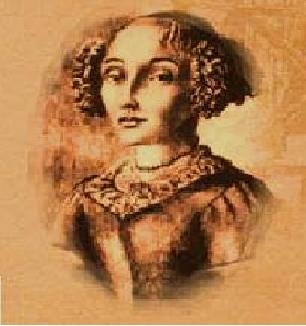
Angela was baptized as a Christian and was welcomed into the Dutch farming society. In 1669 she married a free burgher (Dutch farmer) Arnoldus Basson with whom she had seven children. She had at least three children while she was a slave, one of these, was Johannes van As (who is my ancestor) and another was his sister Anna de Koningh, who married the Swedish Captain, Olaf Bergh in 1677. Anna de Koningh`s portrait is the only one of a former slave of this period that still exists today. As a Captain Olaf Bergh was welcome in the elite circles of the Cape society and was often in the company of both the first and second Governor Simon and Willem Adriaan van der Stel. Anna de Koningh was widowed in 1724 but inherited the van der Stel property Groot Contstantia, Cape Town’s oldest and most prestigious vineyard.
 Angela managed her affairs well and when she died in 1720, her own estate valued at 14 808 guilders and the slaves that she had purchased in her own name.
In 1692, four of the 34 Cape Town free burghers had ex-slave wives, but according to “Cape Town, Making of a City“, compiled by Nigel Worden this was discouraged by the ruling Dutch, although this did not discourage illicit affairs – and illegitimate children borne out of such unions.
Angela, the slave pioneer is the ancestor of thousands of both white and coloured South Africans and I am her descendent from two family lines – both my Grandmother parents Dr Sinclair and my Great Grandmother Ethel Mary Galpin. I also carry her name as a second name – Sally Angela!