After years of absence the flamingo’s have returned to the Zandvlei river mouth in Muizenberg, Cape Town. AWOL Tours has included a rehabilitation programme at Zandvlei river mouth into tour itineraries as part of our environmental responsibility. I wonder if in some small way this has helped restore the ecosystem of the Vlei and encouraged the flamingos to return.
 After years of absence the flamingo’s have returned to the Zandvlei river mouth in Muizenberg, Cape Town. AWOL Tours has included a rehabilitation programme at Zandvlei river mouth into tour itineraries as part of our environmental responsibility. I wonder if in some small way this has helped restore the ecosystem of the Vlei and encouraged the flamingos to return.
After years of absence the flamingo’s have returned to the Zandvlei river mouth in Muizenberg, Cape Town. AWOL Tours has included a rehabilitation programme at Zandvlei river mouth into tour itineraries as part of our environmental responsibility. I wonder if in some small way this has helped restore the ecosystem of the Vlei and encouraged the flamingos to return.
After years of absence the flamingo’s have returned to the Zandvlei river mouth in Muizenberg, Cape Town. AWOL Tours has included a rehabilitation programme at Zandvlei river mouth into tour itineraries as part of our environmental responsibility. I wonder if in some small way this has helped restore the ecosystem of the Vlei and encouraged the flamingos to return.
Years ago the Zandvlei estuary mouth was dredged for a housing development. The flamingo’s left and have finally come back to feed. The greater flamingos are near threatened and seldom seen in Zandvlei Nature Reserve. The bird count has showed no species on the reserve since 2003. Their habitat favours saline and brackish shallow water near coastal mudflats feeding on brine shrimps and brine larvae and algae.
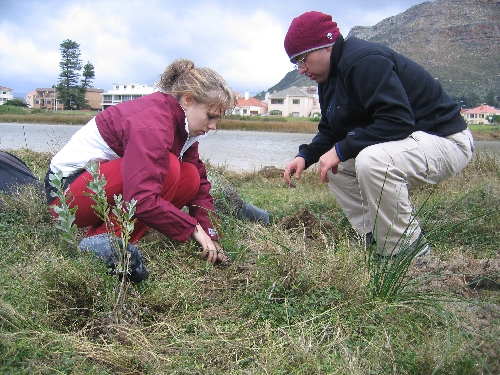
University students on Study Abroad programme have been involved in the rehabilitation of vegetation along the banks of Zandvlei in conjunction with Zandvlei Trust. The planting of coastal fynbos (indigenous vegetation belonging to the Cape Floral Kindgom) is an interactive learning experience and at the same time reduces the carbon footprint when travelling abroad.
Years ago the Zandvlei estuary mouth was dredged for a housing development. The flamingo’s left and have finally come back to feed. The greater flamingos are near threatened and seldom seen in Zandvlei Nature Reserve. The bird count has showed no species on the reserve since 2003. Their habitat favours saline and brackish shallow water near coastal mudflats feeding on brine shrimps and brine larvae and algae.
University students on Study Abroad programme have been involved in the rehabilitation of vegetation along the banks of Zandvlei in conjunction with Zandvlei Trust. The planting of coastal fynbos (indigenous vegetation belonging to the Cape Floral Kindgom) is an interactive learning experience and at the same time reduces the carbon footprint when travelling abroad.
Years ago the Zandvlei estuary mouth was dredged for a housing development. The flamingo’s left and have finally come back to feed. The greater flamingos are near threatened and seldom seen in Zandvlei Nature Reserve. The bird count has showed no species on the reserve since 2003. Their habitat favours saline and brackish shallow water near coastal mudflats feeding on brine shrimps and brine larvae and algae.
University students on Study Abroad programme have been involved in the rehabilitation of vegetation along the banks of Zandvlei in conjunction with Zandvlei Trust. The planting of coastal fynbos (indigenous vegetation belonging to the Cape Floral Kindgom) is an interactive learning experience and at the same time reduces the carbon footprint when travelling abroad.